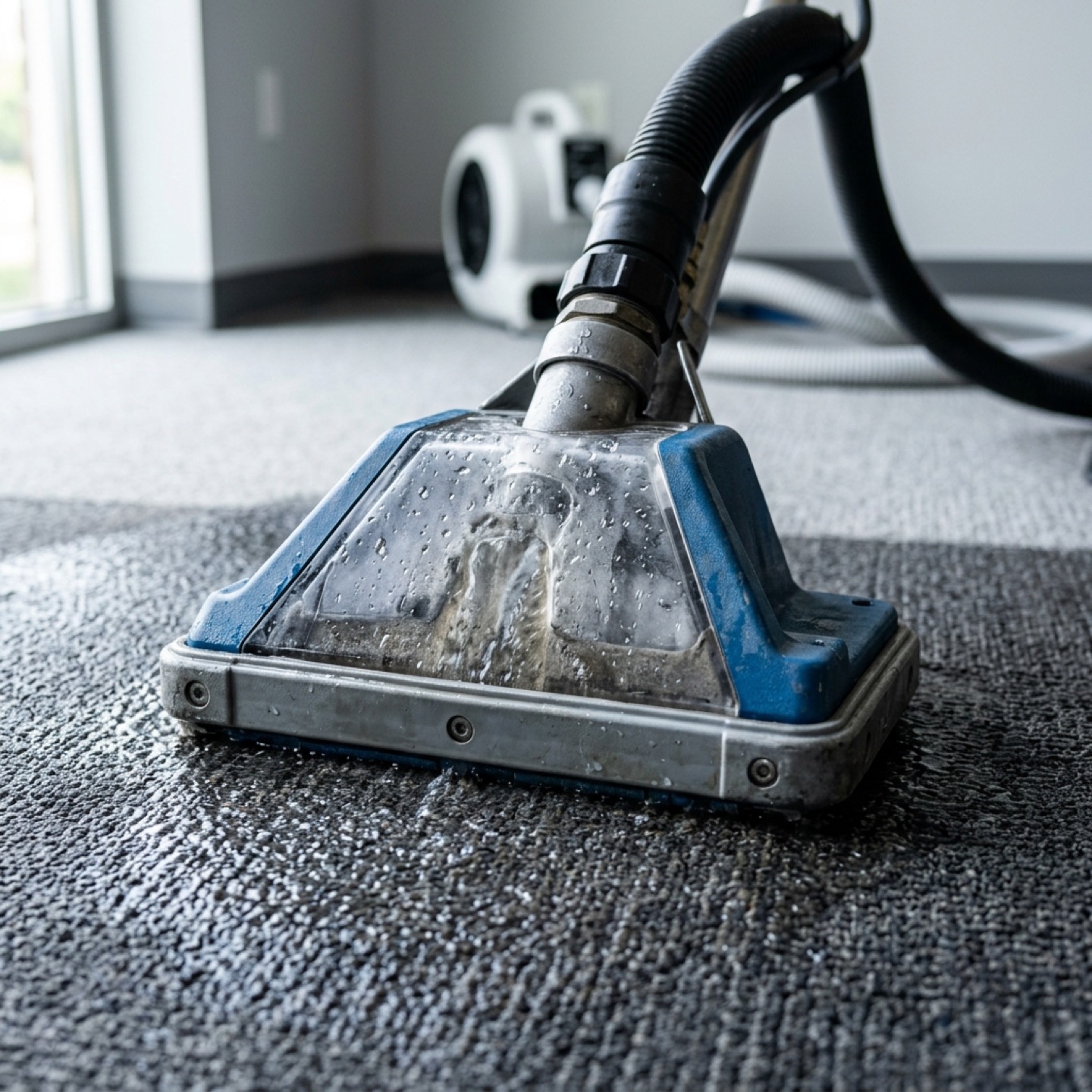
The Extraction Sequence
1. Hazard Assessment
Professionals check for electrical risks and determine the water category.
2. Bulk Removal
High-powered pumps and vacuums extract standing water from floors.
3. Subsurface Extraction
Specialized tools press into carpets and padding to pull out deeply trapped moisture.
4. Drying Preparation
The area is prepped for the deployment of air movers and commercial dehumidifiers.
What Homeowners Can Prepare
- Ensure Safety: Confirm there are no electrical hazards and the water is clean (Category 1) before entering.
- Remove Small Items: Move rugs, small valuables, and light furniture out of the wet area to prevent staining.
- Leave Heavy Furniture: Do not attempt to move heavy, waterlogged furniture yourself; wait for professionals.
Water Categories & Risk
Clean Water
From broken supply lines. Generally safe, but requires rapid extraction before it degrades.
Grey Water
From appliances. Contains significant contamination; avoid direct contact.
Black Water
Sewage or outdoor flood water. Highly toxic and requires specialized PPE and disposal.
What the Provider Will Assess
Upon arrival, a provider must assess whether water has seeped into wall cavities or below the subfloor. This dictates the type of extraction equipment needed, ranging from heavy-duty portable vacuums to truck-mounted extraction units.
Questions to Ask Before Hiring
- Detailed Estimates: Do you provide a detailed written estimate before starting work?
- Certifications: Are your technicians certified (e.g., by the IICRC) in water damage restoration?
- Insurance Handling: Will you document the damage and handle communication with my insurance adjuster?
- Mold Protocol: What is your protocol if you discover pre-existing mold during extraction?
Frequently Asked Questions
- Why is extraction important?
- Physical removal of water is significantly faster and more efficient than relying solely on evaporation with air movers and dehumidifiers.
- What equipment is used?
- Professionals use heavy-duty portable vacuums, truck-mounted extraction units, and specialized tools like weighted rovers to pull water from deep within carpets and padding.
- Can I extract it myself?
- Small spills can be handled with a wet/dry shop vacuum. However, large volumes or water that has soaked into subflooring typically requires professional-grade equipment to prevent hidden moisture from causing structural issues.